

Midterms, Election Interference, and States Push Back
State power and federalism are becoming the central arena of the democracy fight, and that dynamic sometimes cuts across party lines.

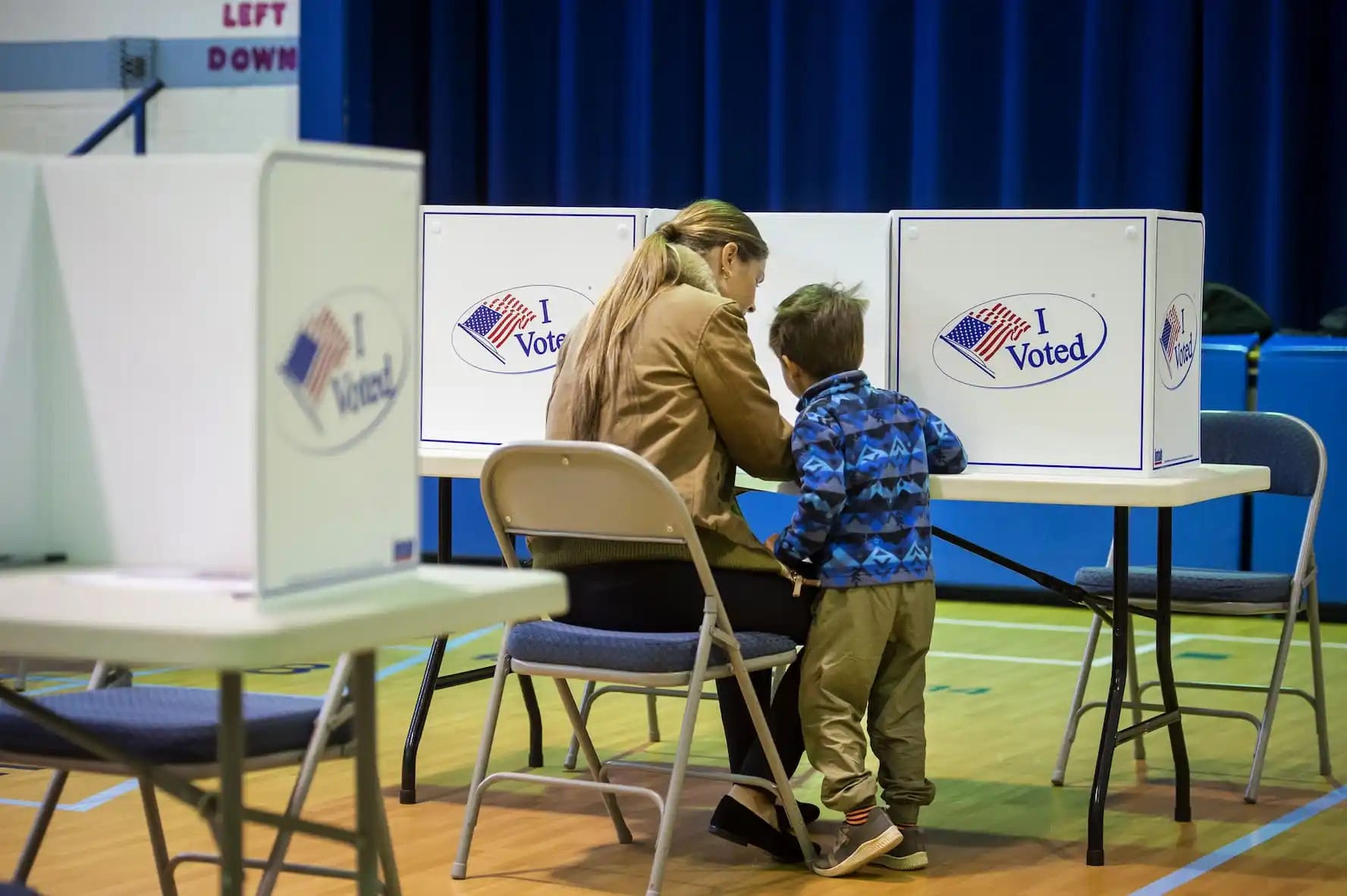
The 2026 midterms are already shaping up to be a stress test for American federalism.
In Washington, allies of Donald Trump are pushing a sweeping emergency order that would dramatically expand federal authority over elections. At the same time, the Department of Justice is escalating its legal campaign to force states to turn over voter data. What could go wrong?
Across the country, many states are moving in the opposite direction. Lawmakers are introducing bills to protect voters, limit federal intimidation, and reinforce the basic infrastructure of elections.
Taken together, the past couple of weeks offer a preview of where the next phase of the democracy fight will unfold. Unsurprisingly, the states are the story.
The Federal Front
Let’s start with the escalation from Trump allies.
Recent reporting indicates that pro-Trump lawyers are urging the president to issue an executive order declaring a national emergency tied to alleged foreign election interference. The proposal would “nationalize” elections, dramatically expand federal authority over election administration ahead of the midterms.
A national emergency declaration could allow the administration to claim sweeping authority over election infrastructure, federal law enforcement deployment, and potentially even voting systems themselves. The legal theory is paper-thin, but the strategy is familiar: manufacture a crisis, declare an emergency, and centralize power.
Meanwhile, the Department of Justice is pursuing a parallel pressure campaign.
The DOJ recently sued five additional states seeking access to their full voter rolls, intensifying a nationwide effort to obtain detailed voter data from state election systems. The administration says the data is necessary to investigate election integrity issues. State officials warn the requests threaten voter privacy and invite political misuse.
At this point the DOJ has sued more than two dozen states in its push for voter data. The effort is now expanding into Republican territory. The latest targets include Utah, Oklahoma, Kentucky and West Virginia.
No one should pretend the Trump midterm subversion strategy is being hatched quietly in a smoky backroom. The strategy is unfolding publicly before our eyes.
Federal authorities are exploring emergency powers, demanding access to state-controlled election infrastructure and data, and signaling a willingness to insert federal enforcement into the election process.
That combination should be setting off alarm bells everywhere.
States Respond
As federal pressure grows, states are getting organized and fighting back.
Across the country, lawmakers are advancing legislation to protect voters and election officials from intimidation and federal overreach.
One flashpoint right now is the presence of federal immigration enforcement near polling places.
Recently, a bill from Arizona Republicans that would have required federal immigration agents at polling locations died. This was a significant win for voting rights advocates who had warned the policy would intimidate voters and undermine confidence in elections.
Other states are moving in the opposite direction.
Connecticut lawmakers are advancing legislation to bar ICE agents from operating within 250 feet of polling places and ballot counting sites.
California legislators are considering a similar measure that would keep federal immigration agents at least 200 feet away from voting locations.
Right now, bills restricting immigration enforcement near polling sites are moving in California, Connecticut, New Mexico, Pennsylvania, Rhode Island, Kansas, Virginia, and Washington.
The concern is pretty straightforward. Federal law enforcement presence near polling places is extremely likely to deter voters and set a dangerous precedent for future elections.
Several states are also advancing broader voting protections right now too.
New Jersey lawmakers advanced a state-level Voting Rights Act to strengthen language access requirements and create new tools to address discriminatory voting practices.
New York legislators are pushing a package of voting rights legislation to insulate the state’s election system from potential federal interference.
Taken together, these measures represent more than routine election administration. States are asserting control over the integrity of their own elections and fighting for their own sovereign rights. That posture has long made parts of the center-left very uncomfortable. But it is simply way past time for states that share democratic values to rediscover “the other f-word” – federalism.
A Cross-Partisan Pushback
Importantly, resistance to federal pressure is not limited to blue states.
In Idaho, Republican Secretary of State Phil McGrane recently rejected DOJ’s demand for the state’s unredacted voter roll, citing both privacy concerns and recent court rulings that undercut the federal government’s legal claims.
Other Republican election officials have taken a similar stance. West Virginia Secretary of State Kris Warner, a strong Trump supporter, has refused to hand over voter information. Federal authorities, he argued, have no authority to run state elections.
His spokesperson put it bluntly: “Bring it on! The federal government is not going to get any personal information on West Virginia voters.”
Election administrators from both parties are asking the same questions. Why does the federal government want this unprecedented trove of sensitive voter information? How will it be used? How will it be protected?
Seeing election officials across the political spectrum defend state authority makes it clear that federal demands are pushing way beyond familiar partisan boundaries. Things are shifting fast.
A Surge of Election Legislation
Zoom out and the scale of state activity becomes even clearer.
Over the past couple of weeks alone, lawmakers in 37 states acted on 460 election-related bills.
Forty state legislatures are currently in regular or special session. In just the last week:
Sixteen bills were enacted
Thirty-seven bills passed both legislative chambers
No bills were vetoed
The partisan distribution is revealing.
Of the bills acted on this week:
141 (30.65%) are in Democratic trifecta states
259 (56.3%) are in Republican trifecta states
60 (13%) are in states with divided government
Election law is moving everywhere, but it’s moving faster in red states. This is something important to watch, because the usual trajectory in those states is familiar — voter suppression tends to follow.
The Real Battleground
All of this reinforces a reality that is still under-appreciated in national political coverage:
American elections are not run from Washington, regardless of what Trump and his henchpeople may say or write on paper. Elections are run by states.
States maintain voter rolls. States administer polling places. States certify results. States regulate election officials and set many of the guardrails around voting access and election security.
That decentralized structure can be messy, but it also creates resilience.
Attempts to centralize federal control over elections, including through emergency powers, data grabs, and law enforcement pressure, run directly into that structure. And states are increasingly aware of it.
What we are witnessing is the early stage of a much larger contest over who controls the mechanics of American democracy.
Federal authorities are testing the limits of their reach, but states are reinforcing their own.
With the midterms approaching, that tension will intensify in every state, regardless of its color on the map.
